Two instruments, one song
Guitar vs fado in Lisbon
Classical guitar, Portuguese guitar and fado explained: why a classical-guitar concert in Lisbon is not a fado show, and which evening suits you.
Reserve a seat at Saint Paul's ↗Classical guitar and Portuguese guitar
| Classical guitar | Portuguese guitar | |
|---|---|---|
| Strings | Nylon | Twelve steel, in six pairs |
| Best known for | Solo concert music | Accompanying fado |
| At this concert | Yes | No |
Two instruments called guitar
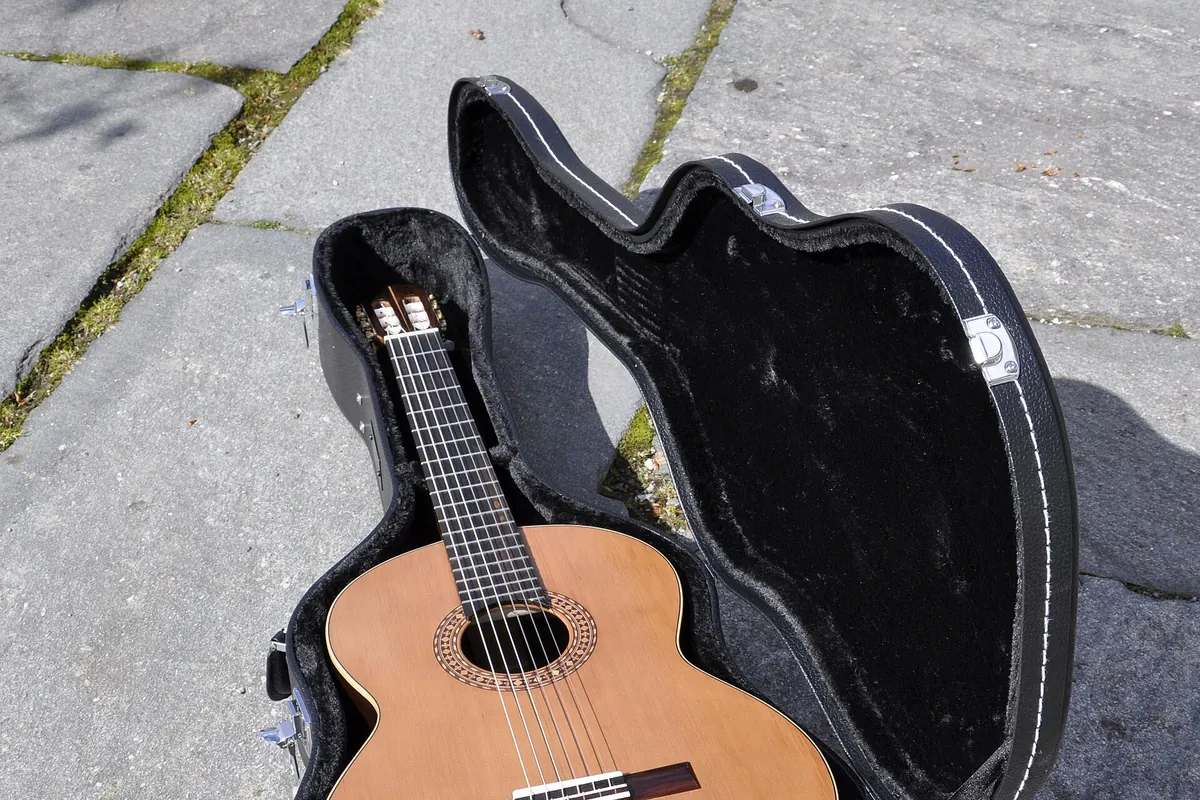
Visitors to Lisbon meet two instruments with the word guitar in their names, and they are easy to confuse. The classical guitar is the Spanish-style instrument with nylon strings that soloists play in recital halls and churches. The Portuguese guitar, guitarra portuguesa, is a different instrument with its own shape, strings and role. The concert at Saint Paul's Church is for classical guitar, so the music you hear there comes from the first instrument, not the second, even though the setting is Lisbon.
The classical guitar
The classical guitar derives from instruments such as the lute and the vihuela, and its modern design was set by the 19th-century Spanish luthier Antonio de Torres Jurado. Its strings were once made of gut and are now made of nylon or similar materials, with wound strings for the three lowest notes. Players pluck the strings with the fingernails or the fingertips. Its repertoire runs from early music to Spanish romantic works and modern compositions, and it is the instrument of the concerts at Lisbon Classical Nights.
The Portuguese guitar

The Portuguese guitar is a plucked instrument with twelve steel strings in six pairs, and it keeps the old watch-key tuners that few instruments still use. Players tune it with those keys and strum or pluck pairs of strings together. It descends from the medieval citole and became associated with fado in the middle of the 19th century. Because it is the instrument most closely tied to fado, the two guitars are often confused.
What fado is
Fado is a Portuguese urban popular song form. English Wikipedia traces it to the 1820s in Lisbon, says it was added to the UNESCO intangible heritage lists on 27 November 2011, and names the Portuguese guitar and the viola, a type of guitar, as its traditional accompaniment. Today a fado performance may be accompanied by a string quartet or a full orchestra. A fado evening is a separate evening from the one this site describes, with a singer at its centre.
Where the two meet
The two traditions do meet. A guest from Germany described fado transcriptions among the pieces played at the concert, and one of the organiser's guitarists describes music that blends Brazilian, flamenco, fado and tango influences with classical and jazz. A transcription is a fado tune adapted for guitar without a singer, so you may hear a melody that has words in another setting. Even then, the instrument on stage is a classical guitar and the evening remains a recital.
Which evening suits you
Choose the Saint Paul's concert if you want to hear a guitarist at close range, learn about the music and sit in a historic church room with at most 25 other people. Choose a fado evening if you want a singer, a story told in song and the sound of the Portuguese guitar. The activity rail under the booking calendar lists other evenings that visitors can book in Lisbon.
Frequently asked questions
Are the classical guitar and the Portuguese guitar the same instrument?
No. The Portuguese guitar carries twelve steel strings arranged in six pairs and is closely tied to fado, while the classical guitar has nylon strings. The Saint Paul's concert uses the classical guitar.
Does the concert include fado?
Not as a sung genre. The concert is for classical guitar, though a guest described fado transcriptions, which are fado melodies adapted for guitar without a singer.
When did fado join UNESCO's list?
English Wikipedia says fado joined the UNESCO intangible heritage lists on 27 November 2011 and traces it to Lisbon in the 1820s.
Sources